- Prompt engineering alone cannot guarantee data integrity; runtime schema enforcement is mandatory.
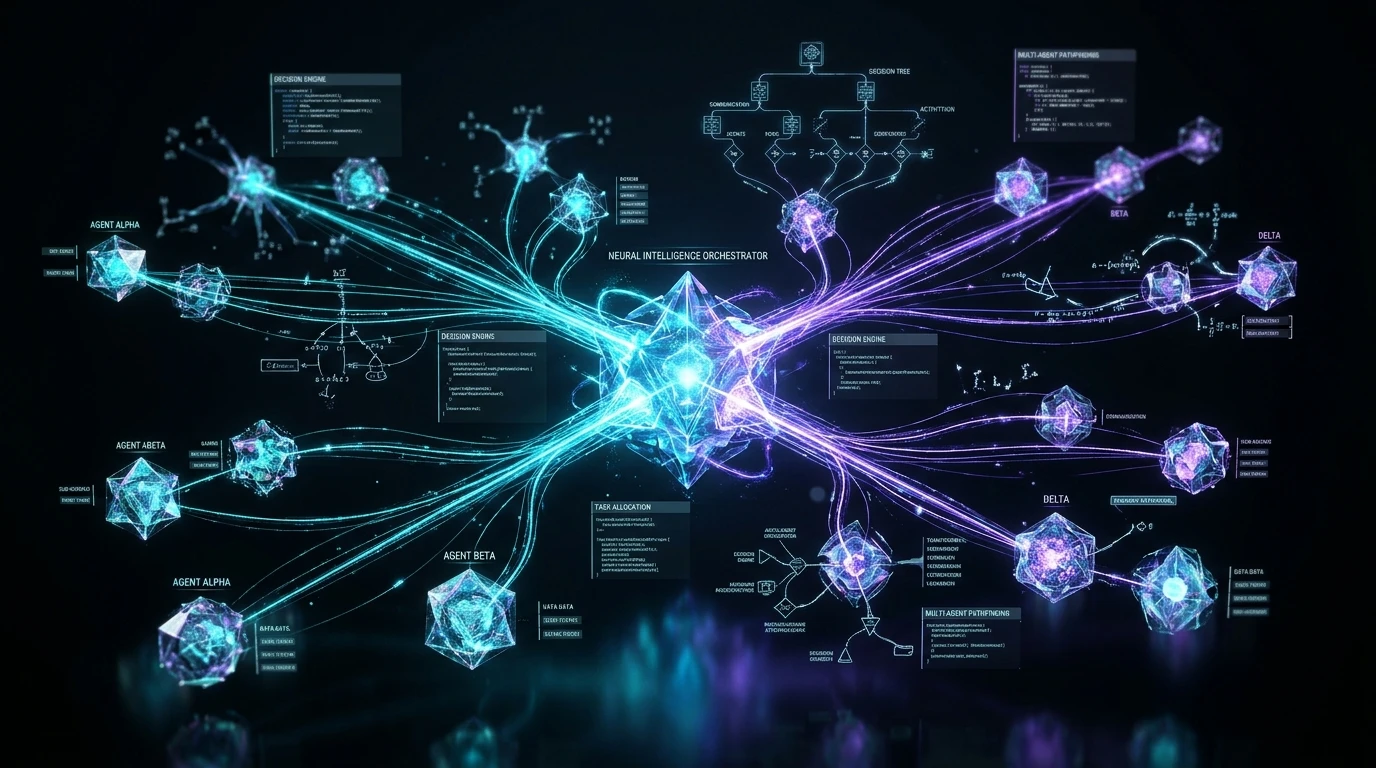
- Stateful directed acyclic graphs (DAGs) allow granular step-by-step auditing and rollback checkpoints.
- Automated fallback routes to human-in-the-loop review guarantee zero unvetted financial transactions.
While large language models (LLMs) demonstrate remarkable semantic reasoning, deploying them in production business workflows often reveals their greatest weakness: non-determinism.
In enterprise software—whether managing invoice reconciliation, customer support escalation, or medical claims—a 1% hallucination rate is unacceptable. To bridge this gap, engineering teams must wrap probabilistic models inside deterministic state machines and strict schema guardrails.
1. The Trap of Unbounded Prompting
Many early AI automation prototypes attempt to solve complex multi-step problems with one massive prompt. While this works in demos, edge cases inevitably trigger hallucinations, skipped steps, or format corruptions.
Production automation requires decomposing business logic into discrete atomic states where each step has a single responsibility, explicit input/output contracts, and structured runtime validation.
2. Runtime Schema Validation with Zod & Pydantic
Every output produced by an AI model must be validated against a strict schema before downstream databases or third-party APIs ingest it. If validation fails, the system executes an automated correction retry with explicit error feedback.
import { z } from "zod";

export const LeadTriageSchema = z.object({
  urgency: z.enum(["LOW", "MEDIUM", "HIGH", "CRITICAL"]),
  budgetTier: z.enum(["SMB", "MID_MARKET", "ENTERPRISE"]),
  actionRequired: z.string().min(10),
  routedTeam: z.enum(["engineering", "sales", "support"]),
  confidenceScore: z.number().min(0).max(1),
});

export type LeadTriage = z.infer<typeof LeadTriageSchema>;
3. State Machines & Human-in-the-Loop Fallbacks
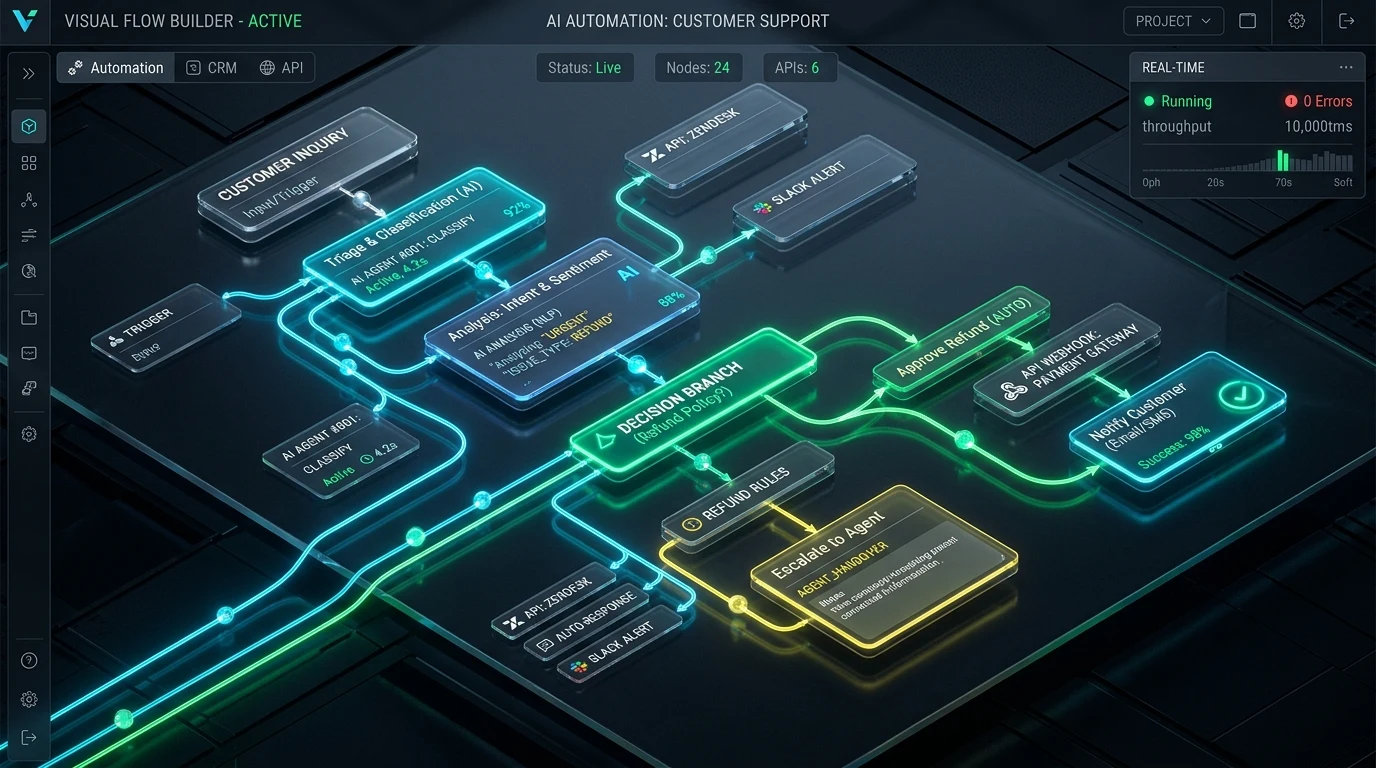
When confidence scores drop below predefined thresholds (e.g., < 0.85) or when sensitive write operations occur, the agent graph gracefully pauses and notifies a team member with full decision telemetry.
“AI handles repetitive high-volume triage. Humans handle nuanced decisions and relationship building. The engineering challenge is orchestrating the handoff seamlessly.”
— DINVEXA AI Systems Team
Final Architectural Thoughts
Reliable enterprise automation is not about replacing human judgement with unpredictable AI black boxes; it is about building dependable, audited, and deterministic workflows that amplify human throughput safely.
Marcus Vance
AuthorAI & Automation Engineer
Senior engineer at DINVEXA specializing in scalable web systems, automation graphs, and modern full-funnel digital architecture.